
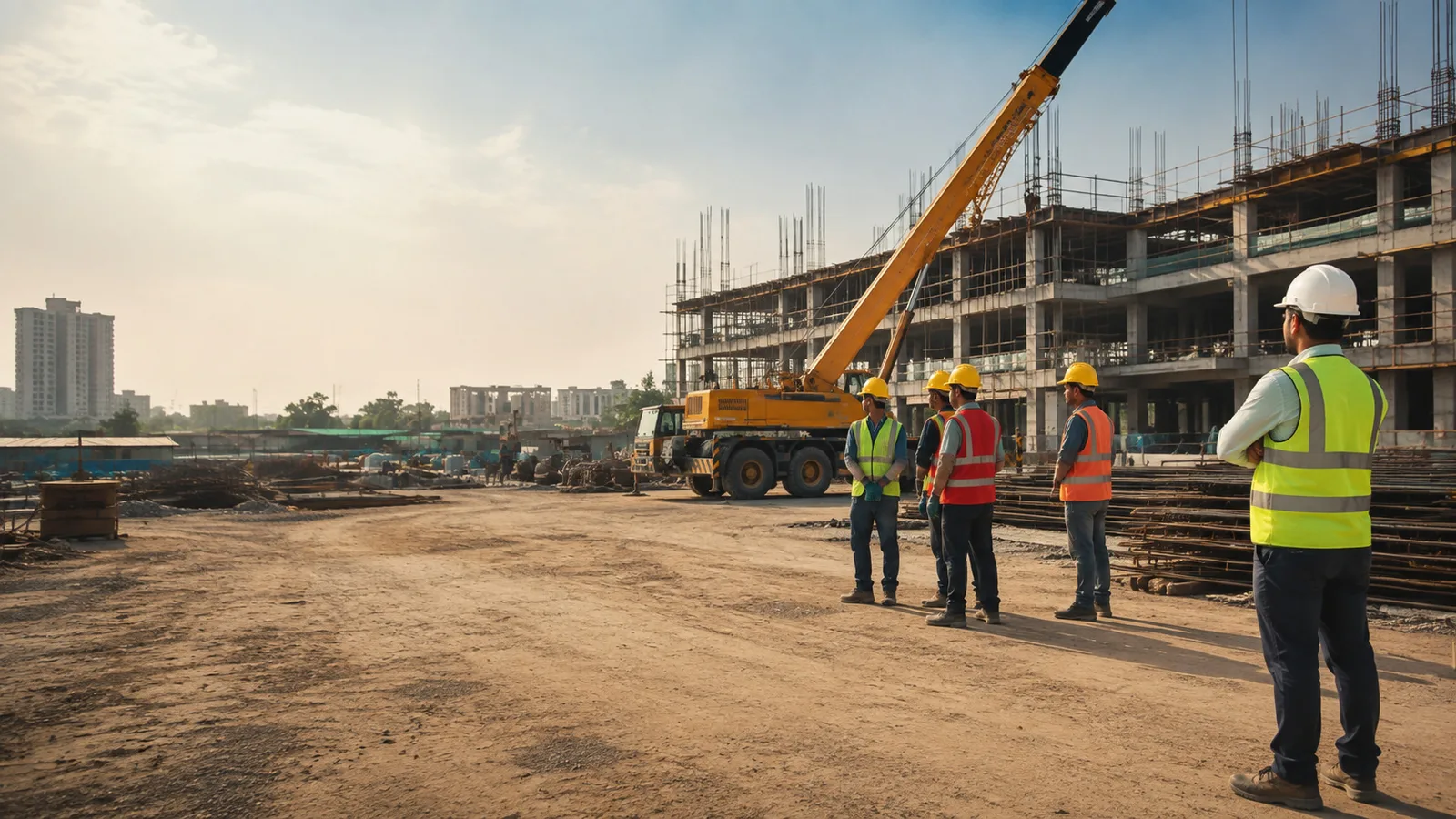
When a contractor is idle, the visible symptom is unused manpower or machinery. The cause is often upstream: a missing drawing, blocked access, late material, unresolved interface or a sequence that was never coordinated.
Construction performance becomes more predictable when planning, people, information and execution are treated as one connected system.
Why this matters
The issue is important because construction activities are connected. A weakness in one part of the system can move quickly into another part of the project as lost access, late information, idle resources, rework, safety exposure or commercial uncertainty. Better control begins by making those connections visible before they become urgent.
What needs to happen in practice
The following actions create a more dependable operating condition:
- Treat idling as a system issue, not only a contractor issue. The important part is to convert this principle into an observable site control with a clear owner, a defined time for action and a way to confirm closure. Construction becomes more predictable when important expectations are made explicit rather than left to individual interpretation.
- Track constraints before manpower reaches the workfront. Readiness is physical as well as administrative. Teams need safe access, usable working space, lifting or handling arrangements and freedom from unresolved predecessor activities. Checking these conditions in advance prevents crews from arriving at an area that exists on the programme but is not genuinely executable.
- Maintain short-horizon look-ahead plans. Sequence converts individual activities into a project. Dependencies, access, approvals and resource movement need to be understood before short-term pressure forces teams into out-of-sequence work. A useful programme therefore remains connected to look-ahead planning and daily site decisions.
Where projects usually lose control
The next set of controls becomes especially important once the project is moving at pace:
- Coordinate approvals and materials with programme need dates. Information has to reach the site in the correct revision and at the time the sequence needs it. A drawing that is technically complete but issued after the workfront has moved is still a project constraint. Clear registers, priority dates and closure ownership make information flow part of production control.
- Record reasons for lost productivity. The important part is to convert this principle into an observable site control with a clear owner, a defined time for action and a way to confirm closure. Construction becomes more predictable when important expectations are made explicit rather than left to individual interpretation.
- Convert site observations into planning actions. The important part is to convert this principle into an observable site control with a clear owner, a defined time for action and a way to confirm closure. Construction becomes more predictable when important expectations are made explicit rather than left to individual interpretation.
Why integration matters
Technical controls become effective only when they are connected to programme, procurement, site sequence and inspection. Isolated excellence in one discipline cannot compensate for unmanaged interfaces. The objective is to make engineering intent buildable, measurable and visible in day-to-day execution.
Creativve's Approach
At Creativve Constructiions, our approach is to connect planning with execution, make responsibilities visible and solve constraints before they become site problems. Reliable delivery is built through disciplined fundamentals repeated every day, supported by transparent communication and continuous learning from the work itself.