
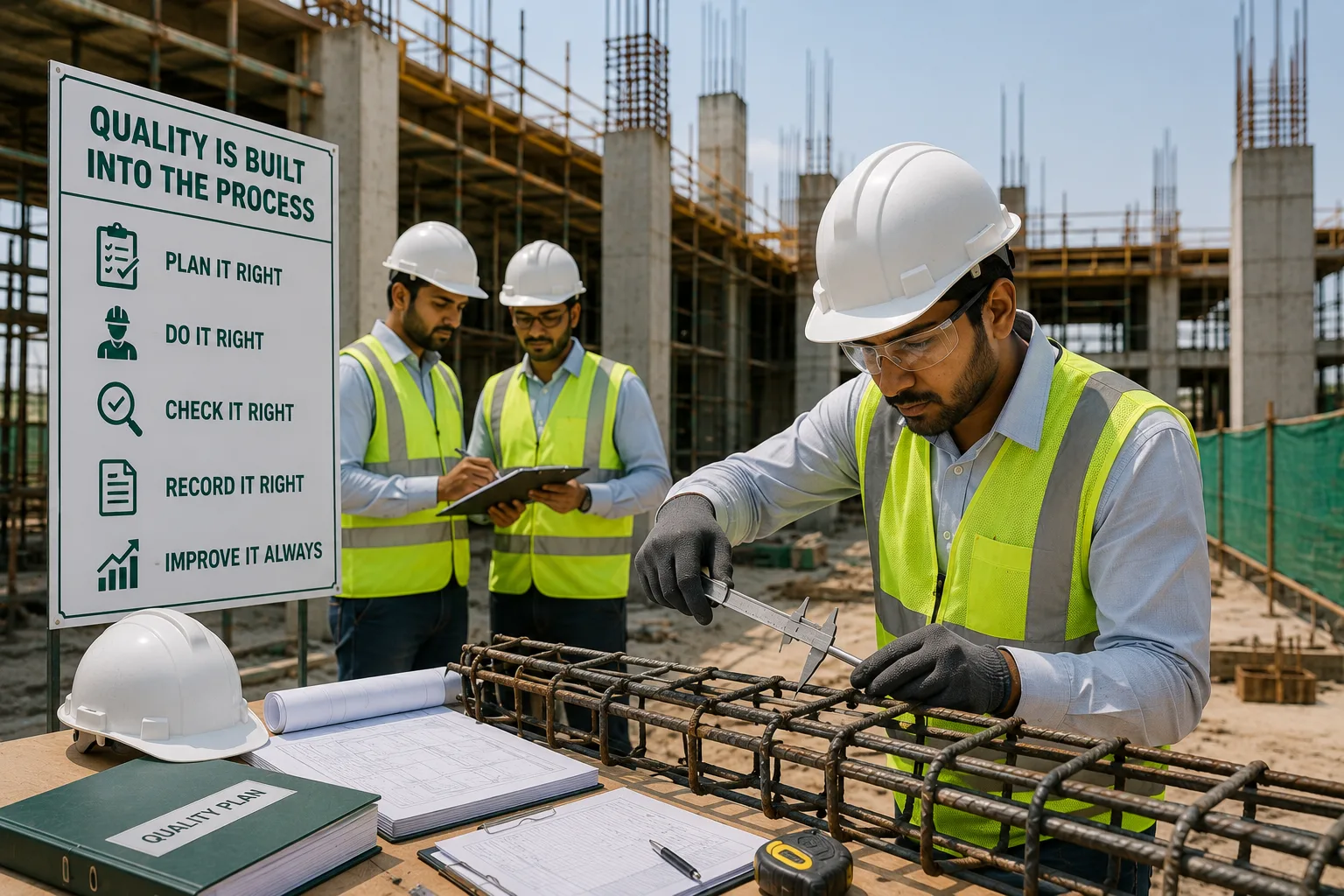
Final inspection can identify a defect, but it cannot recover the programme, hidden work or material already consumed. Quality is strongest when the method, materials, workmanship and inspection points are controlled while the work is being created.
Quality management is most effective when it prevents defects instead of documenting them after completion. That requires discipline in preparation, methods, inspection and feedback.
Why this matters
The issue is important because construction activities are connected. A weakness in one part of the system can move quickly into another part of the project as lost access, late information, idle resources, rework, safety exposure or commercial uncertainty. Better control begins by making those connections visible before they become urgent.
What needs to happen in practice
The following actions create a more dependable operating condition:
- Approve materials and methods before starting. Material planning should be tied to programme need dates, approved specifications and the actual sequence of use. Early purchase without interface clarity can create storage and revision problems, while late purchase converts a predictable requirement into an urgent site constraint. Procurement therefore needs continuous connection with engineering and execution.
- Use mock-ups where appearance or repetition matters. Quality needs to be verified at the stages where correction is still simple. Approved materials, first-off checks, hold points and evidence of inspection reduce the chance that a hidden or repeated defect will move downstream. The aim is prevention and consistency, not a larger snag list at the end.
- Check setting-out and first-off work. The important part is to convert this principle into an observable site control with a clear owner, a defined time for action and a way to confirm closure. Construction becomes more predictable when important expectations are made explicit rather than left to individual interpretation.
Where projects usually lose control
The next set of controls becomes especially important once the project is moving at pace:
- Hold inspections before concealment. Quality needs to be verified at the stages where correction is still simple. Approved materials, first-off checks, hold points and evidence of inspection reduce the chance that a hidden or repeated defect will move downstream. The aim is prevention and consistency, not a larger snag list at the end.
- Record test and inspection evidence. Quality needs to be verified at the stages where correction is still simple. Approved materials, first-off checks, hold points and evidence of inspection reduce the chance that a hidden or repeated defect will move downstream. The aim is prevention and consistency, not a larger snag list at the end.
- Close root causes, not only defects. Quality needs to be verified at the stages where correction is still simple. Approved materials, first-off checks, hold points and evidence of inspection reduce the chance that a hidden or repeated defect will move downstream. The aim is prevention and consistency, not a larger snag list at the end.
Why integration matters
Technical controls become effective only when they are connected to programme, procurement, site sequence and inspection. Isolated excellence in one discipline cannot compensate for unmanaged interfaces. The objective is to make engineering intent buildable, measurable and visible in day-to-day execution.
Creativve's Approach
Creativve's Approach is to build quality into preparation and execution. Inspection remains important, but prevention is always more valuable than correction.