
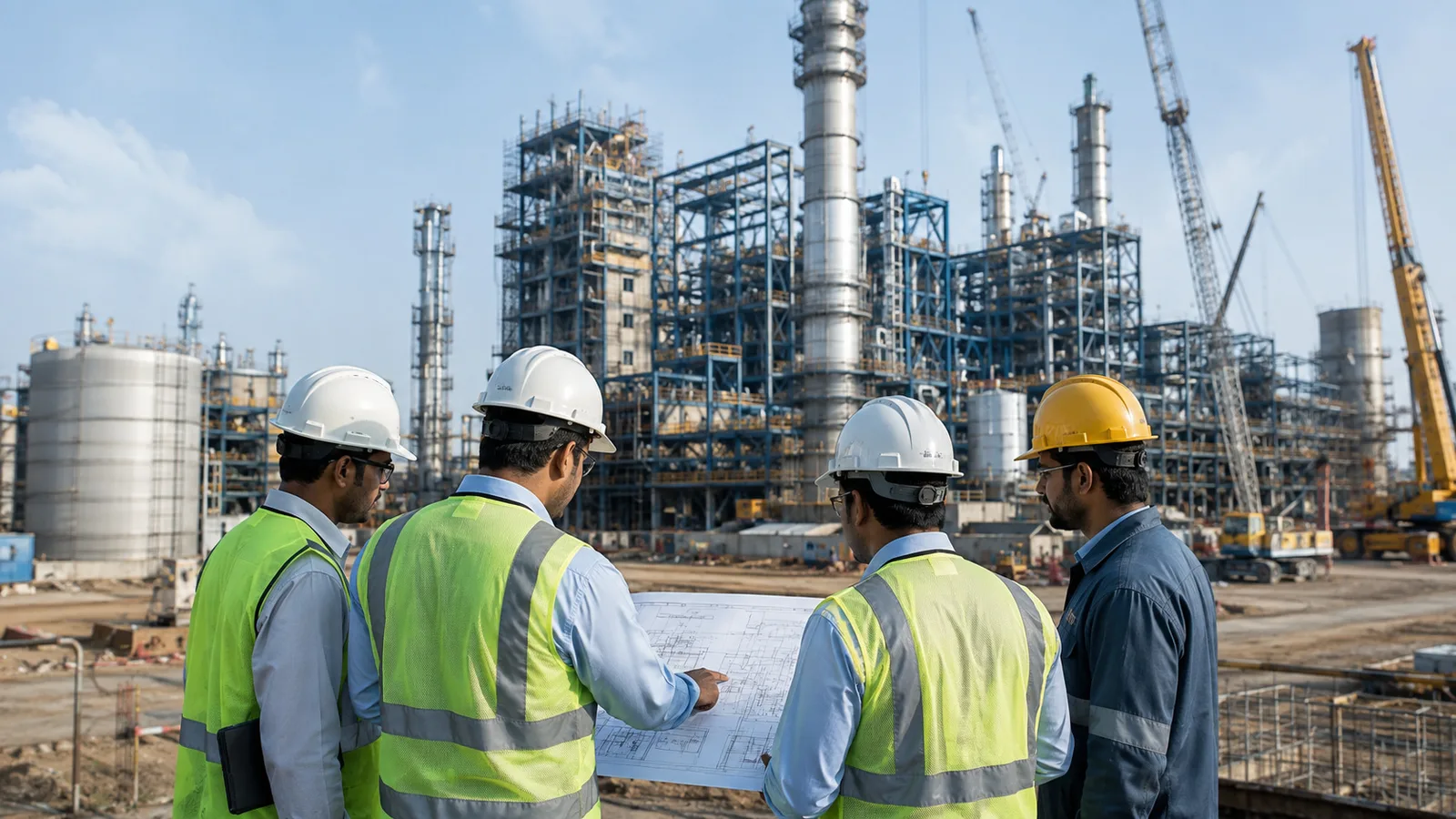
Turnkey and EPC delivery concentrate responsibility. That can simplify the client's interface, but it also raises the standard required from the delivery partner across engineering, procurement, construction, coordination and handover.
Technical execution becomes reliable when engineering intent, construction sequence and site conditions are considered together. Each discipline may be well designed on its own, but project success depends on how the interfaces work in the field.
Why this matters
The issue is important because construction activities are connected. A weakness in one part of the system can move quickly into another part of the project as lost access, late information, idle resources, rework, safety exposure or commercial uncertainty. Better control begins by making those connections visible before they become urgent.
What needs to happen in practice
The following actions create a more dependable operating condition:
- Align engineering with construction sequence. Sequence converts individual activities into a project. Dependencies, access, approvals and resource movement need to be understood before short-term pressure forces teams into out-of-sequence work. A useful programme therefore remains connected to look-ahead planning and daily site decisions.
- Plan long-lead procurement. Material planning should be tied to programme need dates, approved specifications and the actual sequence of use. Early purchase without interface clarity can create storage and revision problems, while late purchase converts a predictable requirement into an urgent site constraint. Procurement therefore needs continuous connection with engineering and execution.
- Integrate civil, structural, MEP and process interfaces. Interfaces are where otherwise correct packages can conflict. Coordination should identify levels, openings, loads, embedded items, service routes and responsibility boundaries before work is fixed in place. An interface register or coordinated review is valuable only when decisions are tracked through to execution.
Where projects usually lose control
The next set of controls becomes especially important once the project is moving at pace:
- Manage change without losing visibility. The important part is to convert this principle into an observable site control with a clear owner, a defined time for action and a way to confirm closure. Construction becomes more predictable when important expectations are made explicit rather than left to individual interpretation.
- Control quality, safety and commercial outcomes. The control is strongest when it is designed into the method and sequence before the task starts. Risk assessment, permits, competent supervision and task-specific communication should make the safe way of working clear and practical. This protects people without turning HSE into a parallel process disconnected from production.
- Deliver documentation and handover as part of the scope. The important part is to convert this principle into an observable site control with a clear owner, a defined time for action and a way to confirm closure. Construction becomes more predictable when important expectations are made explicit rather than left to individual interpretation.
Why integration matters
Technical controls become effective only when they are connected to programme, procurement, site sequence and inspection. Isolated excellence in one discipline cannot compensate for unmanaged interfaces. The objective is to make engineering intent buildable, measurable and visible in day-to-day execution.
Creativve's Approach
At Creativve Constructiions, our approach is to connect planning with execution, make responsibilities visible and solve constraints before they become site problems. Reliable delivery is built through disciplined fundamentals repeated every day, supported by transparent communication and continuous learning from the work itself.