
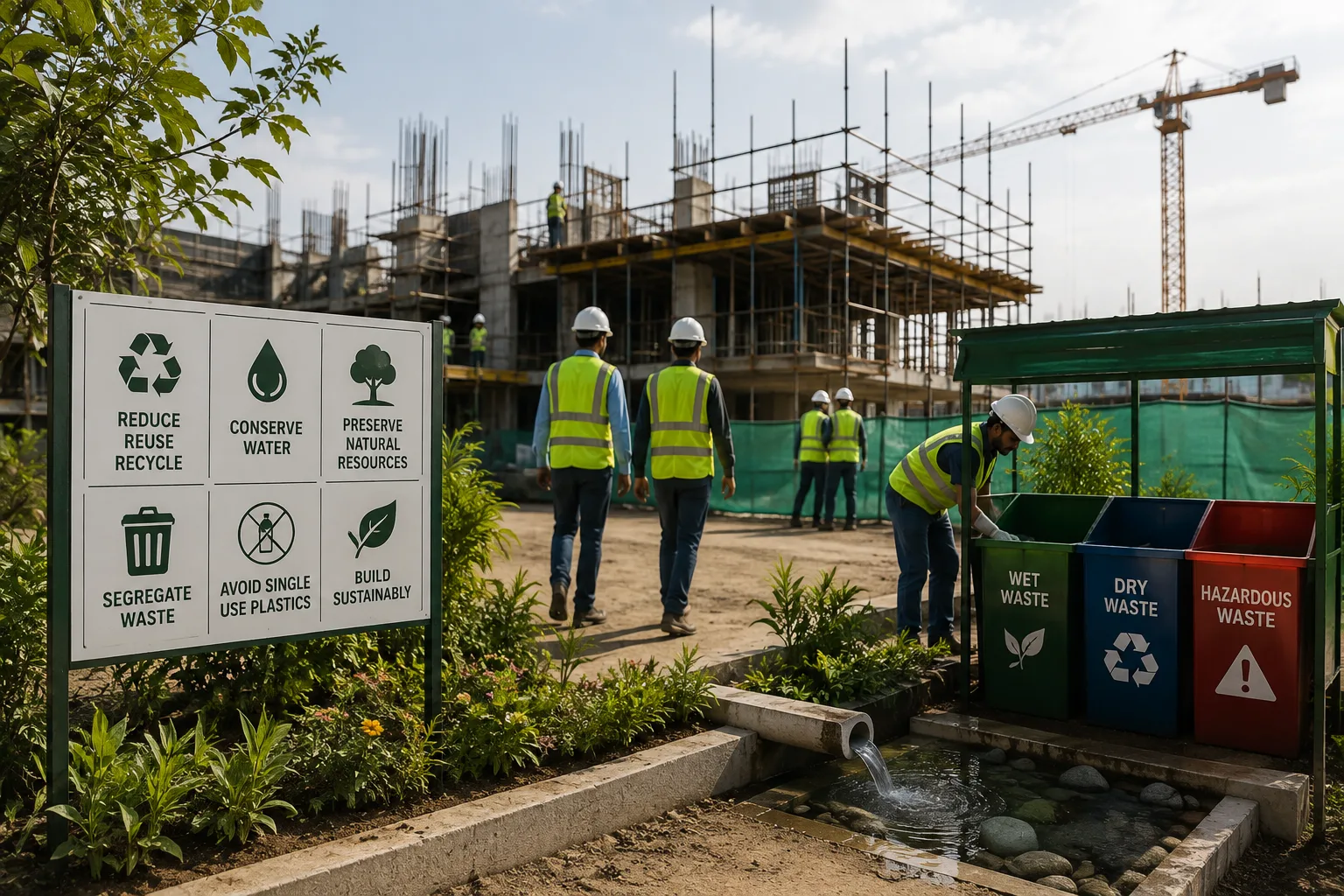
Construction sites are temporary, but their environmental impact can extend beyond the project boundary. Responsible execution manages waste, water, dust, noise, fuel, materials and housekeeping as part of daily site control.
HSE performance improves when safety, health and environmental controls are designed into the work rather than added as a parallel compliance layer. The objective is to make the safe method the practical method.
Why this matters
The issue is important because construction activities are connected. A weakness in one part of the system can move quickly into another part of the project as lost access, late information, idle resources, rework, safety exposure or commercial uncertainty. Better control begins by making those connections visible before they become urgent.
What needs to happen in practice
The following actions create a more dependable operating condition:
- Segregate and dispose waste responsibly. Environmental control is most effective when it is part of ordinary site housekeeping and logistics. Waste routes, storage, dust suppression, spill prevention and water management should be planned with the same practical attention as access and material movement.
- Control dust at source. Environmental control is most effective when it is part of ordinary site housekeeping and logistics. Waste routes, storage, dust suppression, spill prevention and water management should be planned with the same practical attention as access and material movement.
- Prevent oil and chemical leakage. Environmental control is most effective when it is part of ordinary site housekeeping and logistics. Waste routes, storage, dust suppression, spill prevention and water management should be planned with the same practical attention as access and material movement.
Where projects usually lose control
The next set of controls becomes especially important once the project is moving at pace:
- Manage water use and discharge. Environmental control is most effective when it is part of ordinary site housekeeping and logistics. Waste routes, storage, dust suppression, spill prevention and water management should be planned with the same practical attention as access and material movement.
- Reduce unnecessary material loss. Material planning should be tied to programme need dates, approved specifications and the actual sequence of use. Early purchase without interface clarity can create storage and revision problems, while late purchase converts a predictable requirement into an urgent site constraint. Procurement therefore needs continuous connection with engineering and execution.
- Maintain clean access and storage zones. Readiness is physical as well as administrative. Teams need safe access, usable working space, lifting or handling arrangements and freedom from unresolved predecessor activities. Checking these conditions in advance prevents crews from arriving at an area that exists on the programme but is not genuinely executable.
From compliance to operating habit
The goal is not to create more paperwork. It is to make risk controls part of normal production thinking so teams can work safely without treating safety as a competing priority. When the work method and the safe method are the same method, compliance becomes easier to sustain.
Creativve's Approach
Creativve's Approach is to make HSE part of the execution system. We want teams to see safety, health and environmental responsibility in the plan, the method, the workfront and the daily decisions that follow.